What I Wish Someone Had Told Me at 3AM, Six Days Postpartum, Four Thousand Miles From My Mother
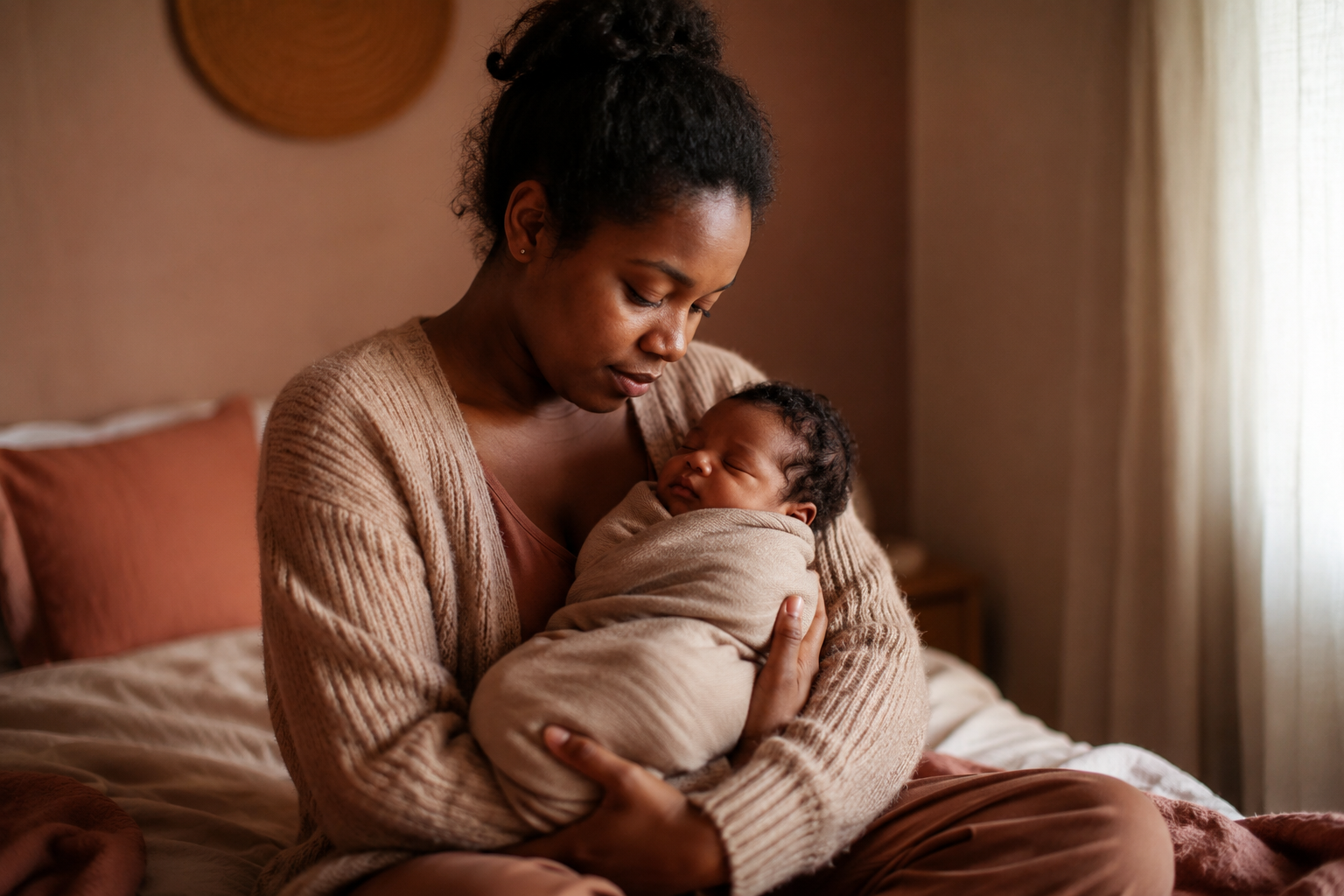
If you're bleeding more than anyone warned you about, if your stomach still looks five months pregnant weeks after birth, if you're doing the maths on ninety-minute stretches of sleep and coming up short every night — I need you to read this slowly.
You were told to "rest and let people help." Nobody told you what happens when the people who were supposed to help live a nine-hour flight away.
Back home, this season had a name. Omugwo. Your mother moves in. An auntie takes over the kitchen. Someone experienced watches you heal, because she's watched a hundred bodies heal the exact same way — and tells you which parts are normal before the fear gets a chance to set in.
Here, you get a midwife visit in week one. A six-week check that might last eleven minutes, if you can even get booked in on time. And a WhatsApp group full of women who mean well, but are just as lost as you are, all of you Googling the same terrifying forum posts at 2am.
So you do what all of us do. You try to push through. You try to be strong. You call your mother and cry, and she says something that breaks you open a little — because she knows, in her time, you would not be alone right now.
And somewhere in the middle of all that exhaustion, the real damage isn't the bleeding or the stomach or the sleep. It's what the isolation does to you. It's snapping at your partner over nothing, because you have nobody else to hand the weight to. It's stopping feeling like yourself, and starting to feel like a function — a body that feeds and rocks and changes nappies, and nothing more.
If that's where you are right now, I want you to stop scrolling and read every word below.
I know. Because I lived it — on a bathroom floor, six days postpartum, crying quietly enough that my husband wouldn't hear through the door.
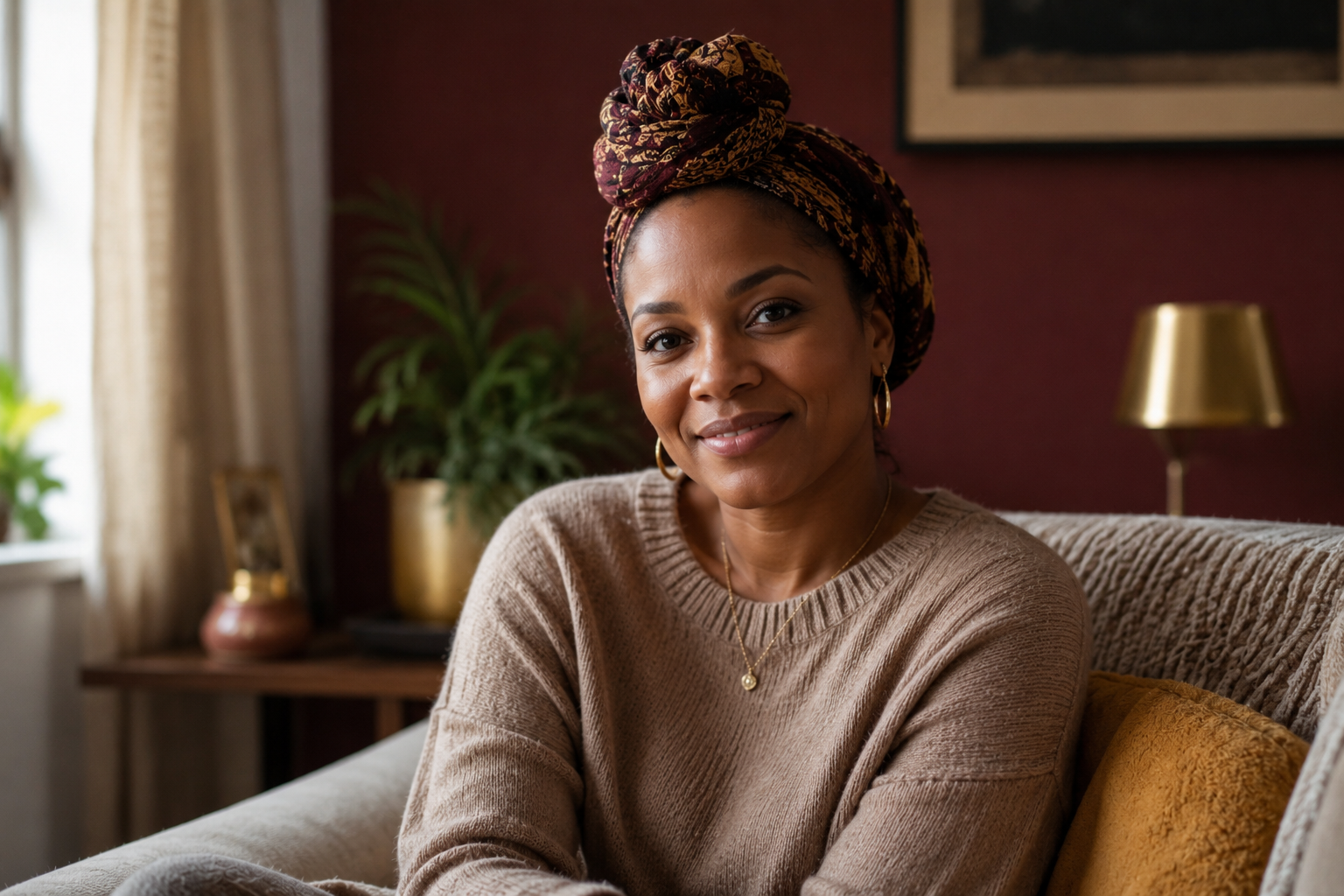
My daughter was perfect. Feeding, sleeping, doing exactly what newborns do. I was the one falling apart — bleeding more than anyone had prepared me for, my stomach still looking five months along, running on scraps of sleep, too proud and too scared to ask if any of it was normal.
Back in Lagos, this is the part where my mother would have moved in. An auntie would have taken over the kitchen. Someone would have taken the baby so I could shower without my hands shaking. Instead, it was just me, a silence so loud it felt like drowning, and a phone full of unanswered "you okay?" texts.
I tried everything I could think of to cope. I read forums until 2am, which only made me more afraid. I called my mother every day for reassurance — it helped a little, but she couldn't see my face, couldn't walk in and take the baby for twenty minutes so I could breathe.
None of it fixed the actual problem: I didn't have a system. I had scattered advice, guilt, and exhaustion, and I was trying to build a plan out of thin air, at 3am, with a newborn on my chest.
So I built the thing I couldn't find. Not another list of tips. An actual structure — one that took everything an auntie would have done for me, and turned it into something I could do for myself.
Why Google and the Group Chat Kept Failing Me
Google gives you one article saying a symptom is fine, another saying go to A&E, and a forum post from 2016 that ends badly. That's not information — that's noise dressed up as help.
The group chat means well, but half the women in it had their babies surrounded by mothers and aunties, and the other half are just as lost as you, Googling the same things and passing the same bad information back and forth.
And even the good advice — the real medical guidance — often isn't built for you. A midwife picturing "let people help" is picturing casseroles and a partner on paternity leave. She isn't picturing a support system that lives a continent away.
That's exactly why I built The 6-Week Homecoming Method — not a forum, not a checklist copied from a parenting website, but a structure built specifically for mothers recovering without a village physically present, who still deserve village-level care.
The 6-Week Homecoming Method
Six phases. The same structure omugwo always followed — rebuilt for a home without an auntie in it.
- RestProtecting your first days the way an auntie would have insisted on — even without her in the room.
- HealUnderstanding what your body is actually doing — bleeding, diastasis recti, and the red flags worth an actual phone call.
- NourishEating in a way that rebuilds you, using traditional postpartum foods adapted to what you can actually find abroad.
- RebuildSafely regaining strength on a realistic timeline — without the pressure to "bounce back."
- ReconnectRebuilding your support system and your marriage, on purpose, instead of waiting for it to arrive.
- ReturnBringing every phase together into one simple, week-by-week roadmap back to yourself.
Every phase blends what your body genuinely needs, medically, with what your culture always knew about postpartum care instinctively. You're not choosing between "Western medicine" and "the old ways." You get both, working together, finally.
No Auntie, No Problem
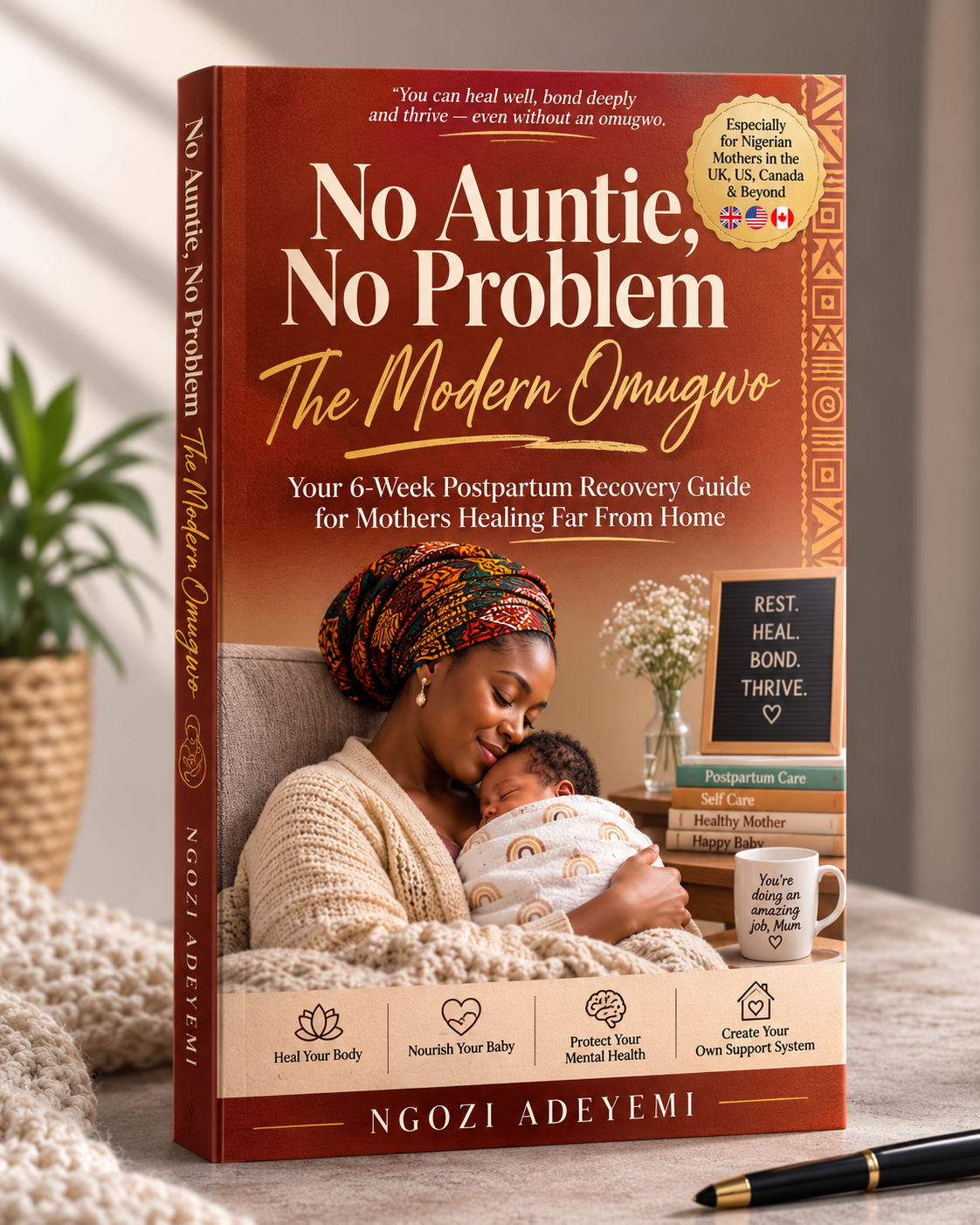
Everything in The 6-Week Homecoming Method, written down in plain language, so you're not building a plan from scratch at 3am with a newborn on your chest.
- What "protected rest" actually looks like, hour by hour, in your first two weeks Chapter 3
- How to tell normal bleeding from a red flag — without guessing, without panicking Chapter 4
- The diastasis recti self-check you can do at home in under two minutes Chapter 4
- How to adapt traditional postpartum meals to whatever grocery store is nearest to you Chapter 5
- A safe, week-by-week movement timeline that protects your pelvic floor instead of rushing it Chapter 6
- The exact three-part conversation to have with your partner about what you actually need Chapter 7
- How to build a "village" abroad — practical, specific steps, not vague encouragement Chapter 7
- The full 6-week roadmap and readiness checklist, pulling every phase together Chapter 8
Two Bonuses, Included Today
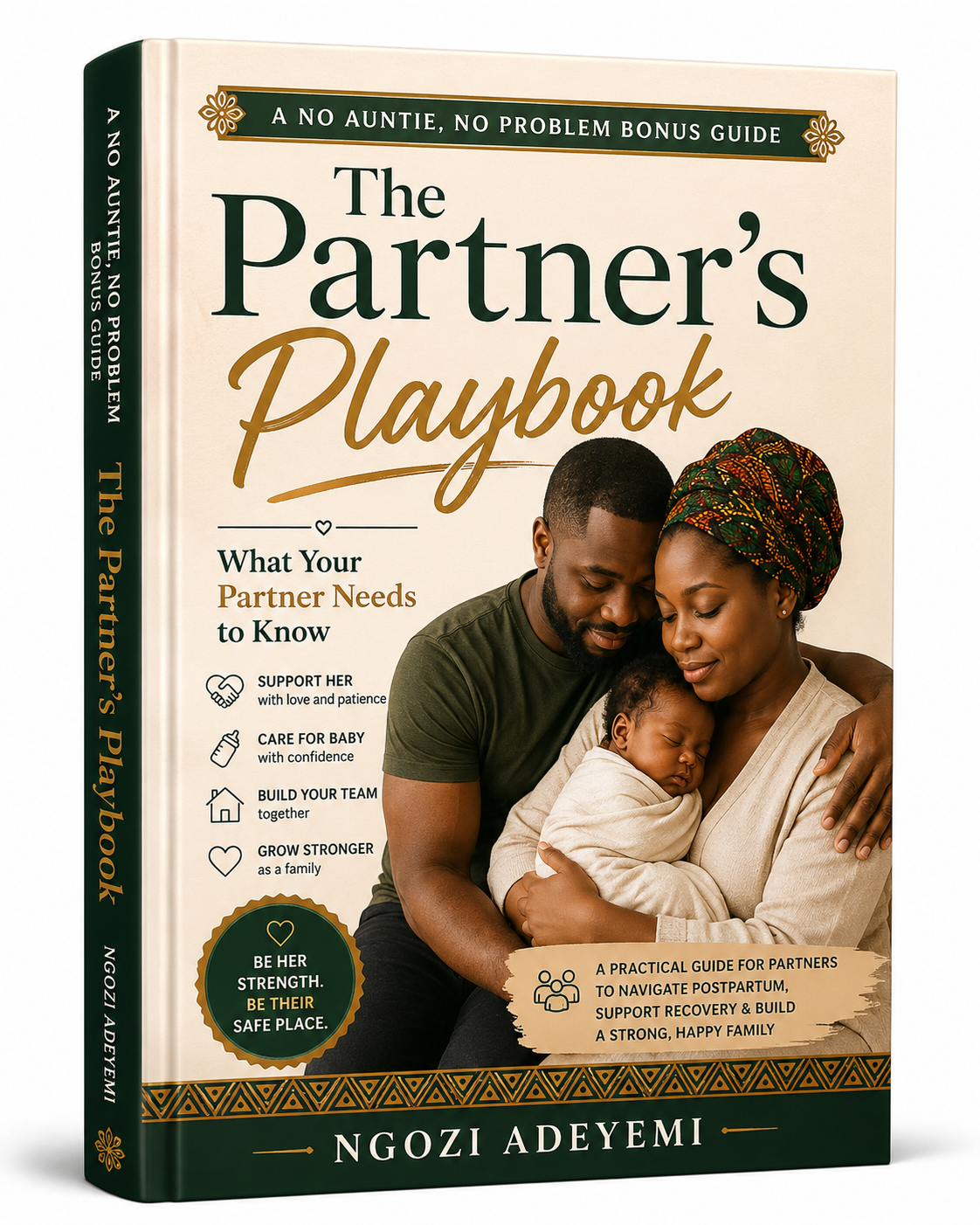
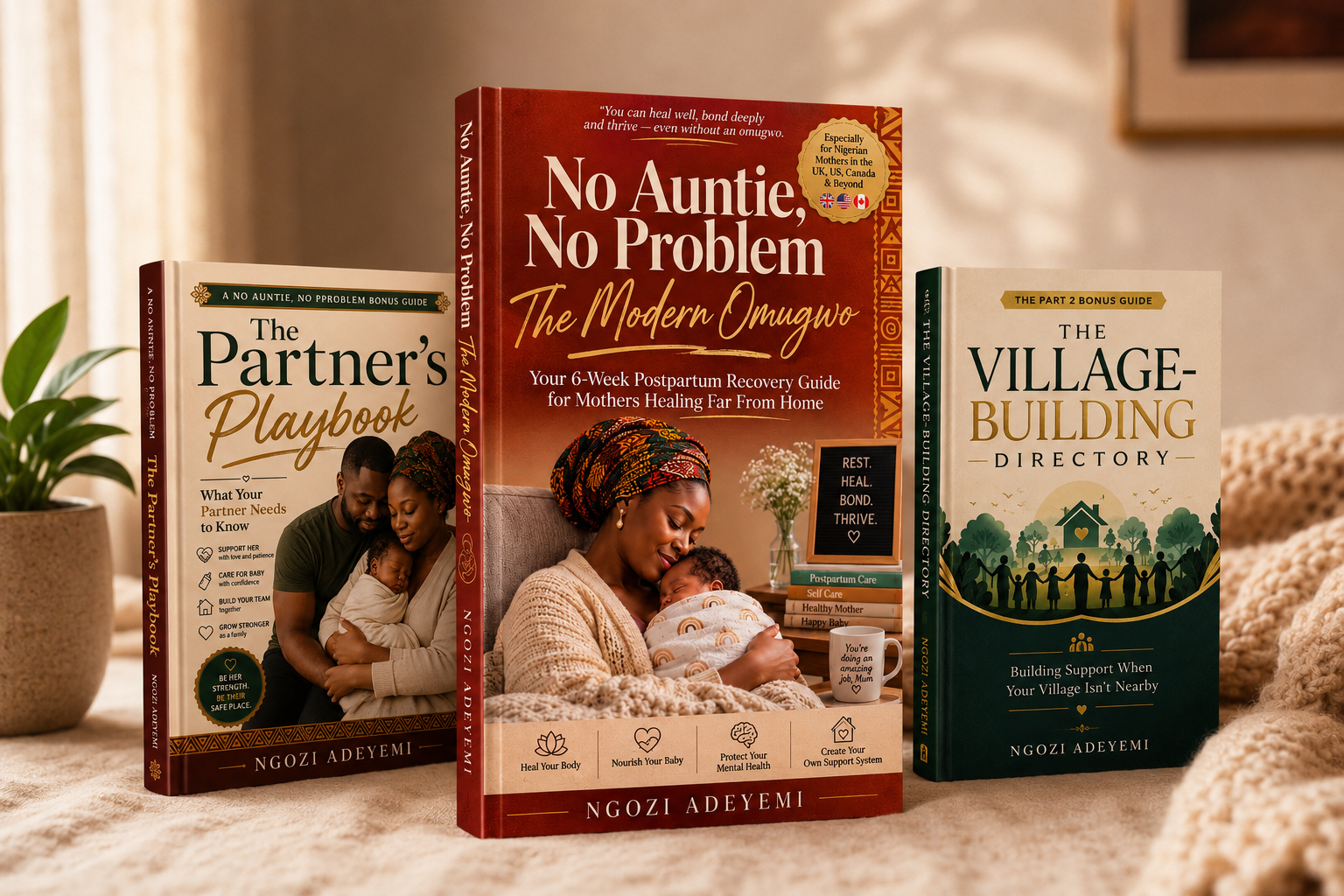
The Partner's Playbook
What your partner actually needs to know — the specific, sayable version of what help looks like in this season, so you're not the one carrying the whole conversation alone.
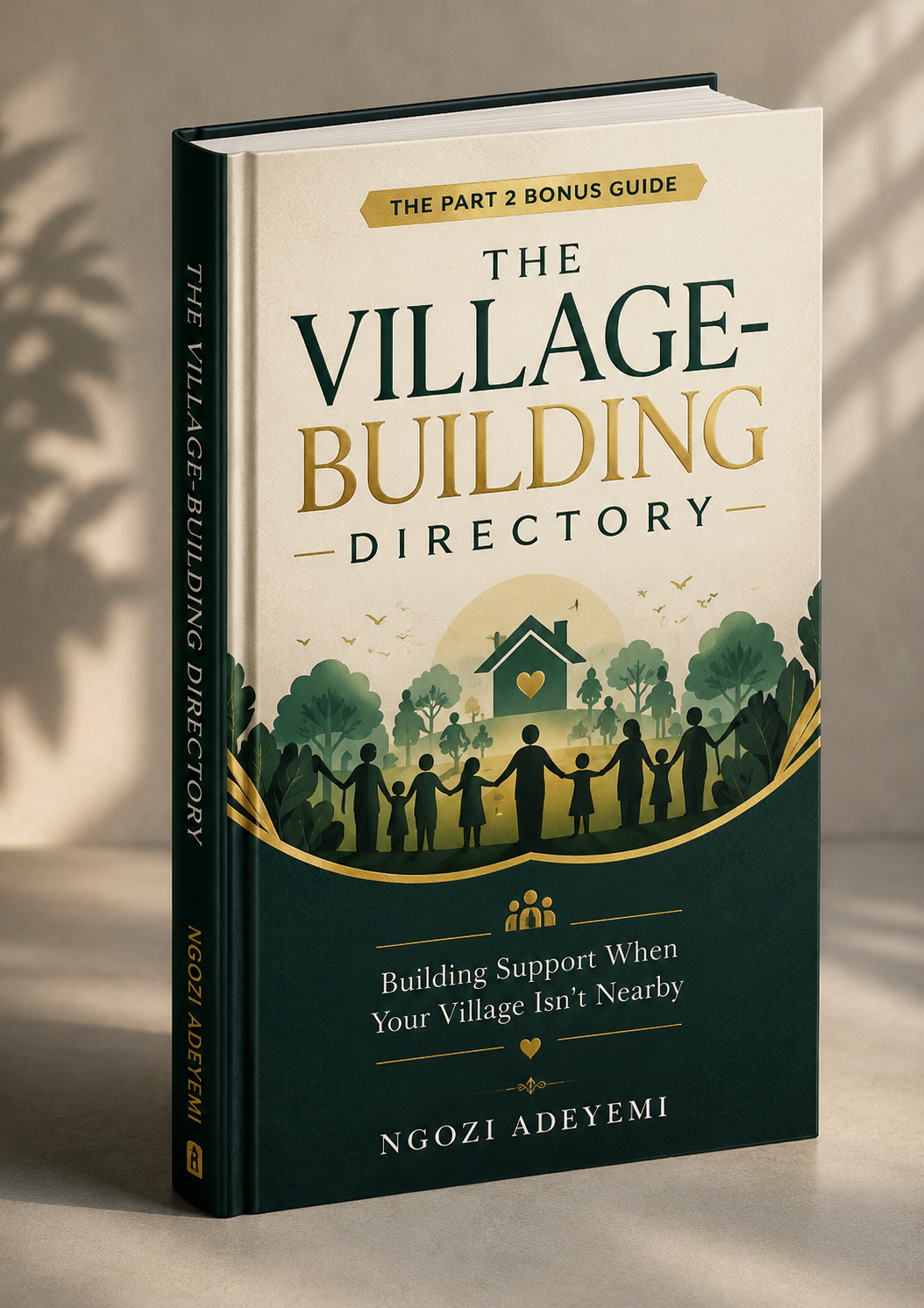
The Village-Building Directory
Practical ways to build real support when your actual village isn't nearby — how to ask, who to ask, and how to accept the help that shows up in a form your mother never would have used.
What It Costs
The main guide is ₦7,500 on its own. Bundled with both bonuses today, here's what you get:
Delivered straight to your email as a PDF. No app to download, no waiting.
A Few Questions You Might Have
How is it delivered?
As a PDF, sent straight to the email you use at checkout. You can read it on your phone, tablet, or laptop, and print it if you'd rather have it on paper by your bed.
I'm not in the UK, US, or Canada — is this still for me?
The guide was written with diaspora mothers in mind, but the six phases — Rest, Heal, Nourish, Rebuild, Reconnect, Return — apply to any mother recovering without her usual support system close by, wherever that support gap comes from.
Is this a substitute for seeing my doctor or midwife?
No. This guide gives you a map so you're not guessing alone at 3am, but it's educational, not medical advice. Anything that concerns you — especially bleeding, pain, fever, or your mood not lifting — is always worth an actual phone call to your provider. The full disclaimer is in the guide itself.
What if I've already had my baby weeks or months ago?
Most of this still applies. Healing doesn't stop at six weeks for a lot of us, and the Reconnect and Return chapters in particular are useful wherever you are in the process.
Will this work if my partner isn't very hands-on yet?
That's exactly what Chapter 7 — and the Partner's Playbook bonus — are built for. Most partners aren't failing to help because they don't care; they're failing because nobody taught them what help actually looks like in this season. The guide gives you the specific, sayable version of that conversation.
Why is this different from a generic postpartum blog post?
Because it was written by someone who lived the exact gap it's addressing — recovering thousands of miles from her own mother, with none of the built-in support omugwo normally provides — and built a structured, six-phase system in response, rather than a scattered list of tips.
One Last Thing
Six weeks from now, you could still be guessing at 2am — Googling the same symptoms, messaging the same group chat, feeling like you're the only one who can't figure this out.
Or you could have a map. One that tells you what your body's actually doing, what to eat, what to ask for, and how to build the support you didn't get handed automatically.
You didn't have your mother in the next room. You didn't have an auntie in the kitchen. But you can build your own version of that care, on purpose, starting tonight.
With love for your healing,
Ngozi